Ingrown toenails
An ingrown toenail happens when the edge of the nail grows into the skin. It can be painful and get infected, and a quick office procedure can bring relief.
What is an ingrown toenail?
The side or corner of the nail curves down and presses into the skin next to it. It most often affects the big toe. The skin can become sore, red, and swollen. If the skin breaks, germs can get in and cause an infection.
Common causes
- Cutting nails too short or rounding the corners
- Tight or narrow shoes, or socks that crowd the toes
- Nails that are naturally curved, which often runs in families
- Stubbing or injuring the toe
- Thick nails, sometimes from fungus
Signs to watch for
- Pain along the side of the nail, worse in shoes
- Redness and swelling around the nail
- Pus or drainage
- Extra, puffy tissue growing over the nail edge
- Warmth or a throbbing feeling
Get help right away if… redness is spreading up the toe or foot, you have a fever or chills, or the toe turns dark. Call our office the same day or go to urgent care or the emergency room. If you have diabetes, nerve damage, or poor circulation, don't wait for an ingrown nail to get worse. Call us soon, even if it does not hurt much.
Why to skip "bathroom surgery"
It is tempting to dig out the nail with scissors or clippers at home. This often makes things worse. You may leave a sharp spike of nail under the skin, cut the skin, or push germs deeper. That can turn a sore toe into an infection. If you have diabetes or poor feeling in your feet, home cutting can lead to wounds that are hard to heal.
What you can do at home

- Soak the foot in warm, soapy water for 10 to 15 minutes a few times a day, unless your doctor tells you not to
- Keep the toe clean and dry, and cover it with a bandage
- Wear roomy shoes or sandals
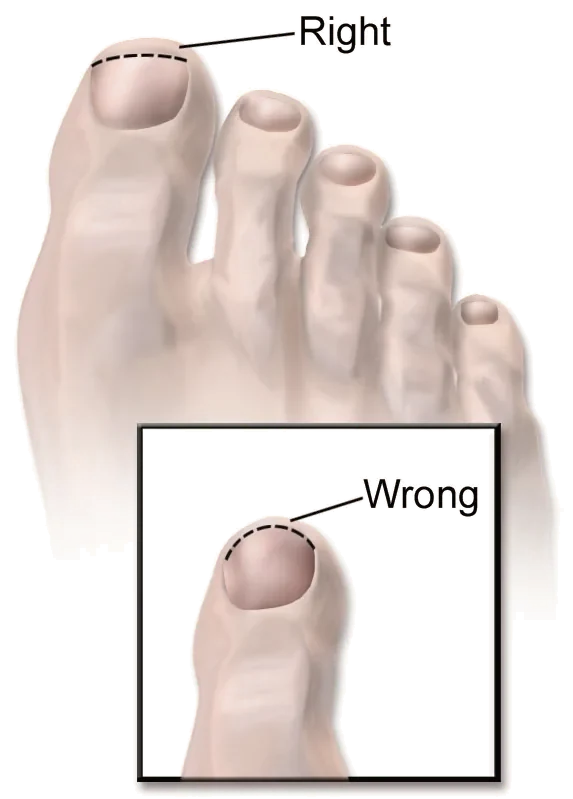
- Cut nails straight across, not too short
If it isn't better in a few days, or it keeps coming back, come in.
The in-office procedure
Treatment is usually quick and done right in the office.
- Numbing: the toe is numbed with a small shot, so you should only feel pressure during the procedure
- Partial nail removal: only the ingrown edge of the nail is removed, not the whole nail
- Stopping regrowth (matrixectomy): if the problem keeps coming back, the root of that nail edge can be treated, often with a chemical, so that strip of nail does not grow back
If there is an infection, you may also need antibiotics.
Recovery
Most people walk out of the office and go back to normal daily activities within a day or two. You will get simple instructions for soaking and bandages. The toe often heals over about 2 to 4 weeks. Healing can take longer if the nail root was treated or if you have diabetes or poor circulation.
How Dr. Nafal can help
Dr. Nafal treats everyday foot problems like ingrown toenails, as well as complex conditions. He explains every option in plain words, so you know what to expect before anything is done.
Common questions
Does the procedure hurt?
The numbing shot may sting for a moment. After that, most people feel pressure but not pain. Some soreness afterward is common.
Will my toenail look strange afterward?
When only one edge is removed, the nail is a little narrower. Most people find it looks close to normal.
Will it come back?
It can, especially if only the nail edge is removed. Treating the nail root lowers the chance that edge grows back.
Talk to Dr. Nafal about your ingrown toenail
Offices in Canton and Troy. New patients welcome.