Ankle sprains and sports injuries
A sprained ankle is one of the most common injuries, at any age. The right care early on can help you heal and lower the chance of spraining it again.
What is an ankle sprain?
A sprain is an injury to the ligaments, the tough bands that hold bones together at a joint. Most ankle sprains happen when the foot rolls inward and the ligaments on the outside of the ankle stretch or tear.
Sprain grades in plain words
- Grade 1 (mild): the ligament is stretched. There is mild pain and swelling, and you can usually walk.
- Grade 2 (moderate): the ligament is partly torn. There is more swelling and bruising, and walking hurts.
- Grade 3 (severe): the ligament is torn all the way. There is a lot of swelling, and the ankle may feel loose or unstable.
A "high ankle sprain" affects ligaments above the ankle joint. It often takes longer to heal than a typical sprain.
Could it be a fracture?
A sprain and a broken bone can look and feel alike. Get an exam and an X-ray if:
- You can't take four steps on the foot right after the injury or later
- Pressing on the ankle bones or the outside of the foot hurts a lot
- The ankle or foot looks out of shape
- Pain is not getting better after a few days
Get help right away if… the foot or ankle looks badly out of shape, a bone is showing, or the foot is cold, pale, or numb. Go to the emergency room or call 911. If you have diabetes or nerve damage, have any ankle injury checked soon, even if it does not hurt much.
First aid in the first days
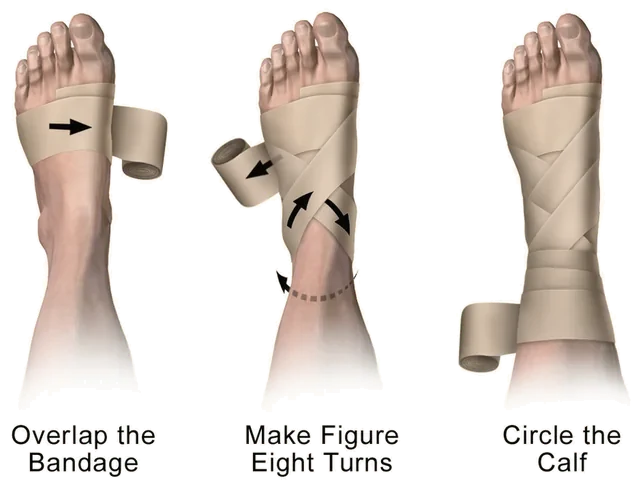

Rest, ice, compression, and elevation in the first days can help with pain and swelling:
- Rest: limit walking, and use crutches if it hurts to stand
- Ice: about 15 to 20 minutes at a time, with a cloth between the ice and your skin
- Compression: a snug, not tight, elastic wrap
- Elevation: keep the ankle raised above your heart when you can
Long periods of complete rest are usually not needed. Gentle movement, as your doctor advises, is often part of healing.
Treatment
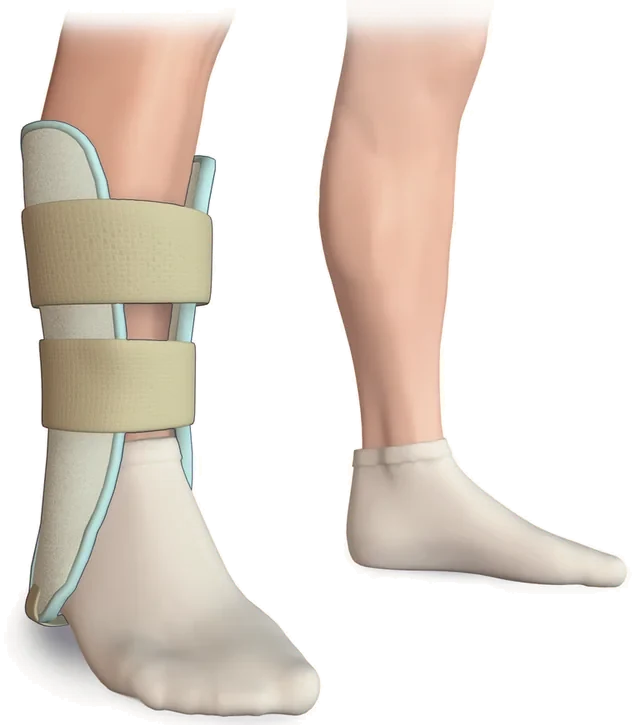

- Bracing: a lace-up or stirrup brace, or a walking boot for more severe sprains
- Physical therapy: to bring back motion and strength
- Balance training: exercises that retrain the ankle to react and stay steady
Why repeat sprains matter
If a sprain doesn't heal fully, the ligaments can stay loose and the ankle can lose its sense of balance. This can lead to more sprains and an ankle that gives way often. This is called chronic ankle instability. Over time, it may damage the cartilage in the joint.
Surgery may be considered when the ankle keeps giving way after a full course of bracing and therapy. It usually involves tightening or rebuilding (reconstructing) the ligaments on the outside of the ankle.
Getting back to activity
Mild sprains often improve in 1 to 3 weeks. More serious sprains can take 6 weeks to several months. Getting back to sports depends on strength, balance, and being able to run, jump, and cut without pain. A brace or tape may help for a time when you return.
Hurt at work or in a car accident? Dr. Nafal accepts workers' compensation and Michigan no-fault auto insurance. See what to bring.
How Dr. Nafal can help
Dr. Nafal is board qualified in Foot Surgery and in Reconstructive Rearfoot and Ankle Surgery. His focus includes lower extremity trauma and everyday foot and ankle problems. He explains every option in plain words, including options that don't involve surgery.
Common questions
Do I need an X-ray for a sprained ankle?
Not always. An exam can show whether an X-ray is needed. If you can't walk on it, an X-ray is usually a good idea.
Should I keep wearing a brace?
A brace can help while you heal and when you return to sports.
Why does my ankle keep rolling?
Loose ligaments and weak balance after past sprains are common reasons. An exam can show what is going on.
Talk to Dr. Nafal about your ankle sprain or sports injury
Offices in Canton and Troy. New patients welcome.