Getting around after surgery
The right boot, shoe or scooter protects your foot while it heals and helps you stay independent. Here's what Dr. Nafal often uses and how to get ready.
The tools Dr. Nafal often uses
Walking boot (CAM boot)
A CAM boot (controlled ankle motion boot) is a removable boot with a stiff, rocker-shaped sole. It holds your ankle steady while bones, tendons or ligaments heal. Many patients wear one after ankle or rearfoot surgery, after a fracture, or after a bad sprain. Your instructions will tell you when to wear it, when you can take it off, and how much weight to put on it.
Surgical shoe (post-op shoe)
A surgical shoe has a flat, stiff sole and an open, adjustable top that fits over a bandage. It keeps the front of the foot from bending as you walk. It's often used after bunion, hammertoe or other surgery on the front of the foot.
Knee scooter
A knee scooter (knee walker) lets you rest the knee of your healing leg on a padded seat and push with your other foot. When you must keep all weight off your foot, many people find it easier and less tiring than crutches. It works best on flat floors, and you need good balance and a strong other leg. Crutches or a walker may still be needed for stairs.
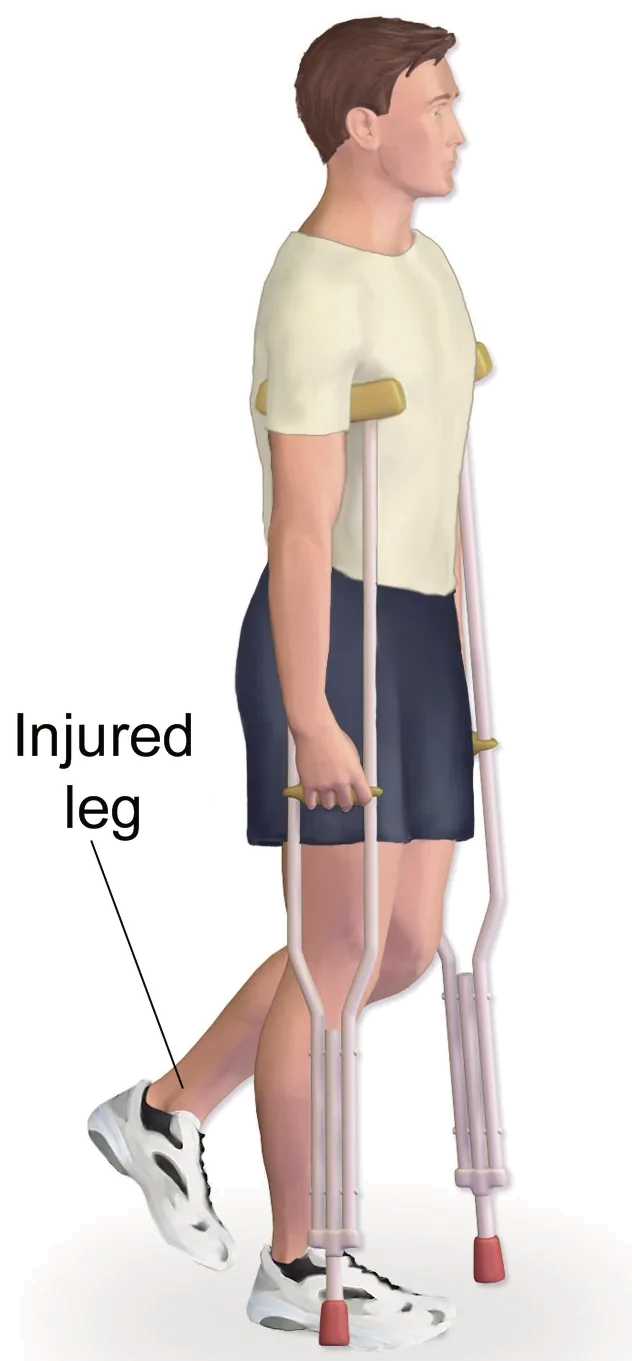

Crutches or a walker
Crutches and walkers help with balance and keep weight off the foot. A walker is often steadier for older adults. See the crutches, walker and knee scooter sheet.
How to get them
- Dr. Nafal will tell you which items you need and write a prescription or order if your insurance requires one.
- You get them from a medical supply company or store. The office doesn't sell them.
- Insurance may cover some or all of the cost. Call your plan before surgery and ask about "durable medical equipment."
- Knee scooters can often be rented if you only need one for a few weeks.
Get ready before surgery
- Have your boot, shoe or scooter at home before surgery day.
- Practice with the scooter or crutches for a few days so you feel steady.
- Clear walkways, remove loose rugs, and move things you use every day to waist height.
- Plan for a ride home and help with meals, errands and the first few days.
- Think about bathing: a shower chair and a waterproof cast or boot cover can help.
Call the office right away if your toes turn pale, blue or cold, the boot or bandage feels too tight, or you have new calf pain or swelling, a fever, or drainage from the wound. Call 911 for chest pain or trouble breathing.
Common questions
Can I sleep in my walking boot?
It depends on your surgery. Some patients need to wear it at night and some don't. Follow the instructions Dr. Nafal gives you.
Can I drive in a boot?
If the boot is on your right foot, you usually should not drive. Ask Dr. Nafal when it's safe for you.
How long will I need these?
It varies with the surgery and how you heal. It is often a few weeks for smaller surgeries and longer for ankle and rearfoot surgery. Your plan will be explained before surgery.
Questions about your recovery?
Call the office. We're glad to help you plan.